Traditional, Hybrid, or Self-Publishing: How to Choose the Publishing Path That Actually Supports Your Life
Part One Of The Self-Publish Your Book In 2026 Series
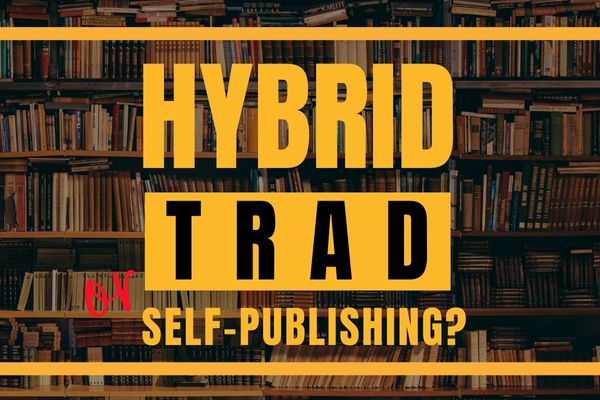
If you want to publish a book, you have three real options today: traditional publishing, hybrid publishing, or self-publishing.

Most authors are told this as if it’s a personality quiz or a moral choice. As if one option makes you “legitimate,” another makes you “brave,” and the third means you “gave up.”
That framing is unhelpful, and it’s one of the reasons so many authors end up frustrated, underpaid, or stuck waiting on permission.
The truth is simpler and more empowering than that:
Each publishing path is designed to do a different job.
And the right choice depends entirely on what you want your book to do for you.
So instead of asking, “Which path is best?”
Let’s ask a much better question:
Which publishing path supports the kind of author life I actually want?
Traditional Publishing: Validation First, Control Last
For many people, traditional publishing still feels like the ultimate goal. A contract. A publisher’s name on the spine. Proof that someone important said “yes.”
There’s nothing wrong with wanting that.

Traditional publishing can offer:
Professional editing and cover design
Wider distribution into bookstores and libraries
Cultural legitimacy (yes, even your relatives will take you more seriously)
Sometimes, an advance
But here’s the part that often gets glossed over.
The Trade-Offs Most Authors Aren’t Told About
Traditional publishers are businesses that invest in lots of books and put the majority of their marketing resources behind a small handful each year. Most authors end up on what’s called the mid-list, which means the book exists, but the author is still expected to do much of their own promotion.
An advance, when offered, is not a bonus. It’s an advance against royalties. You don’t earn additional money until that amount is earned back in sales...and many books never do.
You’ll also likely need a literary agent, who takes a percentage of both your advance and your royalties. And you’ll give up a significant amount of creative and business control: covers, pricing, timelines, and positioning are usually not your call (but maybe you don't want them to be!)
Then there’s time. Even after acceptance, it can take a year or more before your book is released.
None of this makes traditional publishing bad but it does mean that it might not fit your goals for your author career and that's worth looking at.
Traditional Publishing Makes Sense If:
Your book has a very clear, marketable hook
You’re comfortable trading speed and control for validation and reach
You want to focus more on writing than on business decisions
You’re okay with income being unpredictable, especially early on
Side note: small independent presses can seem like a good way to get a trad publishing deal with less competition but they are also volatile and may not survive as a business long term. If you are published with a smal press publisher who shuts down, you will get the rights back to your book but it will no longer be available for sale and you'll have to decide what to do with it next.
Here are some resources to help you learn more about traditional publishing:
Alexa Donne - Agent/Publisher Contract Terms You Should Know https://www.youtube.com/watch?v=8xhqoKZ_GXg
Cindy Pham - How I got my book deal: the submission process, rejections, & behind the scenes convos https://www.youtube.com/watch?v=k8gYNLkV6ds
BrandieReadsBooks - SPILLING THE TEA ON TRADITIONAL PUBLISHING 🫖📚 https://www.youtube.com/watch?v=mAqCqLnro38
Literary Agents Thoughts on How Hard it is to Get Published https://www.youtube.com/watch?v=ZaTOUPSz1os
Hybrid Publishing: Paying to Skip the Line (Not to Buy Worth)
Hybrid publishing sits between traditional and self-publishing — and it’s often misunderstood.
A hybrid publisher doesn’t require querying or acceptance. You’re not paying them to decide if your book deserves to exist. You’re paying for professional publishing services: editing, design, formatting, distribution setup, and sometimes launch support.
This is where clarity matters.
A legitimate hybrid publisher is transparent about:
What you’re paying for
What rights you retain
What outcomes are realistic
What they do not guarantee
The red flags appear when publishers promise bestseller status, passive income, or “done-for-you success” without explaining how fragile those claims are. It is a very wise idea to find out who some of their clients are and reach out to talk directly about how those authors' experiences with the publisher were.

When Hybrid Publishing Can Be the Right Tool
Hybrid publishing can make sense if:
The book supports another goal (a business, speaking, credibility)
You don’t want to learn every publishing skill yourself
Speed matters more than long-term royalty optimization
You see the book as an asset, not a lifelong income engine
You are essentially trading money for time and expertise. Packages typically cost several thousand dollars or more, depending on how much support you want.
This isn’t a failure or a shortcut. It’s a business decision.
In my line of work I have met several owners of Hybrid presses so if you are interested in that route, here are a few to check out:
https://www.tarafiedpublishing.com/ (mainly for women in wellness with non-fiction books)
https://www.lauradifranco.com/ (mainly for healers with non-fiction books)
Self-Publishing: Ownership, Leverage, and Long-Term Control
Self-publishing is the path I chose — and continue to choose — because it aligns with how I want my time, income, and creative control to work.
Self-publishing isn’t new. What’s new is how accessible it has become.
The internet, ebooks, and print-on-demand removed the biggest historical barrier: upfront financial risk. Today, you can publish a book without ordering thousands of copies or storing boxes in your garage.
What self-publishing really offers is ownership.
You control:
Pricing
Covers and branding
Release timelines
Updates and revisions
Marketing strategy
Where your book leads readers next
And importantly, the skills you learn compound. Once you understand formatting, descriptions, keywords, and distribution, those skills apply to every future book.
Books don’t go out of print online. They continue working long after the launch buzz fades.
That doesn’t mean self-publishing is effortless. It means it’s learnable.

Self-Publishing Works Best If:
You want control over your work and your income
You’re willing to learn or systematize the process
You value flexibility and scalability
You see books as long-term infrastructure, not one-time events
This is where many authors are surprised. They assume traditional publishing is the “business” route and self-publishing is the risky one when in reality, self-publishing often offers the most predictable path to sustainable, flexible income over time.
The Only Question That Actually Matters
So how do you choose?
Forget prestige. Forget what sounds impressive. Forget what other authors tell you that you should want.
Ask yourself this instead:
What is my goal for this book?
That answer clarifies everything.
Are you looking for:
Income?
Visibility?
Credibility?
Creative fulfillment?
A foundation for future offers?
A low-stress way to share your story?
Then ask:
Do I want to learn the systems myself, or hire expertise?
Do I want speed, or am I comfortable waiting?
How much control do I want over my work?
There is no universally “best” publishing path.
There is only the one that supports the life you’re trying to build.
And once you choose with intention, the publishing process stops feeling overwhelming — and starts feeling strategic.
If you’re interested in self-publishing, I break down the real costs, systems, and steps so you can make informed decisions without overpaying or overworking in this blog and video series (follow along here or on YouTube).
If you’re considering traditional or hybrid publishing, the key is understanding what you’re trading and what you’re keeping.
Publishing isn’t about permission anymore. It’s about alignment.
And that’s where financially free author careers are built.

Visit my shop to see author website templates and other book marketing resources! https://financiallyfreeauthor.com